Blackheads are stubborn. You scrub, you squeeze, you slap on a pore strip, and three days later they are back on your nose like nothing happened. That cycle leaves skin red, raw, and still bumpy.
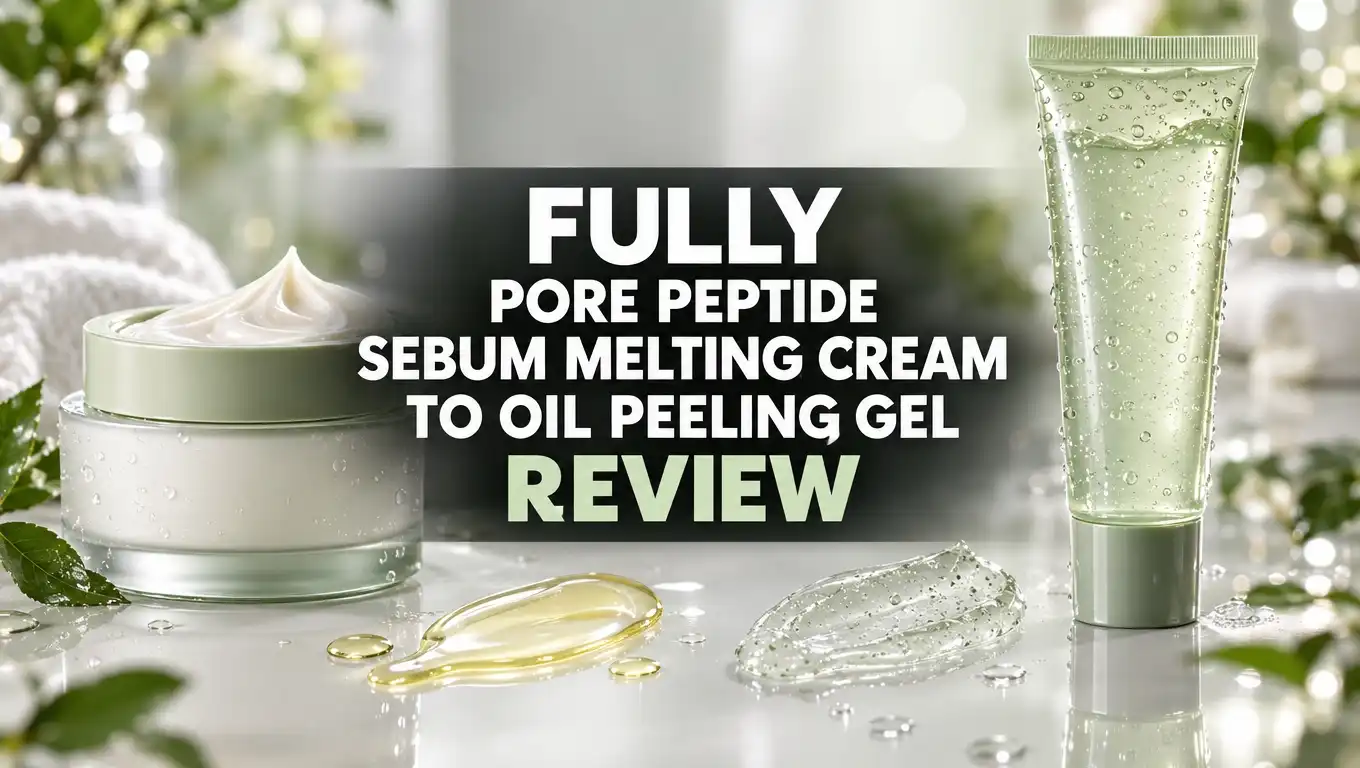
The FULLY Pore Peptide Sebum Melting Cream to Oil Peeling Gel promises something different. It does not scrub. It does not rip. It melts.
This Korean pore treatment starts as a thick white cream. Your skin warmth turns it into a clear oil. Then you roll it off, and the softened sebum comes with it.
This review covers the formula, the ingredients, the real results, the drawbacks, and whether it deserves a spot in your 2026 routine.
Keep reading. The melting part is satisfying, but there is one usage mistake that ruins the whole experience, and most people make it on day one.
Key Takeaways
Here is the short version for readers who want the verdict fast.
- The melting mechanism is real. The cream reacts to skin heat and friction, then turns into a transparent oil that loosens hardened sebum inside pores. You roll it off instead of scrubbing it off, which means far less irritation than a physical scrub.
- The ingredient list does the heavy lifting. A five step melting system built on AHA, LHA, bromelain, sodium bicarbonate, and succinic acid works through surface dead skin first, then moves into deeper pore buildup.
- Pore care continues after cleansing. Tannin complex, green tomato extract, niacinamide, and peptides stay behind to tighten the look of pores and even out tone, so your nose does not look stretched out after use.
- Results build slowly. Most testers noticed smoother nose texture after the second or third use. Visible blackhead reduction took closer to three weeks of twice weekly use.
- It is not for daily use. Overuse causes dryness and tightness. Two times per week is the sweet spot for oily skin, and once per week suits combination or sensitive skin.
- Best value sits in the middle range. The 50ml tube typically costs around twenty one dollars at Korean retailers, which puts it below luxury exfoliants and above drugstore peeling gels.
What Is the FULLY Pore Peptide Sebum Melting Cream to Oil Peeling Gel?

- Game-Changing Blackhead Solution: No more painful extractions or harsh scrubbing. This Cream-to-Oil formula wraps around...
- Sebum Removal + Pore Tightening: Targets every stage of pore buildup with a double-action formula. AHA, LHA, Sodium...
Last update on 2026-10-29 / Affiliate links / Images from Amazon Product Advertising API
FULLY is a Korean skincare brand focused on pore care. This product is their flagship treatment, sold in a 50ml tube, and it sits in a category that barely existed three years ago.
Most peeling gels are water based. You rub them in, they ball up with cellulose, and the little grey rolls fall off. Those rolls are mostly product, not skin.
This one works differently. It is an oil based melting treatment disguised as a peeling gel.
You apply a thick layer of white cream onto completely dry skin. You wait three to five minutes. During that wait, the cream warms up and changes state.
The texture shifts from opaque cream to clear slippery oil. That phase change is the whole point of the product. The oil phase dissolves the sebum plugs that water based products cannot reach.
Then you roll gently with your fingertips. Softened sebum lifts out in tiny grain like threads, and dead skin comes along with it.
The brand markets it as a sebum eraser, and that description fits better than the peeling gel label on the box. It is closer to a melting mask than a scrub.
It currently ranks as one of Olive Young’s top sebum care products, which tells you the Korean market responded well to it.
The formula also carries a second job. After the sebum comes out, leftover actives work on pore appearance and skin tone, so you are not left with empty open pores.
How the Cream to Oil Melting Technology Works
The science here is simple once you break it down. Sebum is an oil. Hardened sebum plugs inside pores are oxidized oil mixed with dead keratin.
Water based cleansers struggle with that mix. Oil dissolves oil, which is why cleansing balms exist.
FULLY takes the oil principle one step further. Instead of applying oil directly, it applies a cream that becomes oil on your face.
Why does that matter? A cream sits still. It stays exactly where you put it, in a thick layer over your nose or chin, without running off.
As the cream holds in place, your skin temperature rises slightly under the occlusive layer. The emulsion breaks. The oil phase separates and spreads.
By the time you start rolling, the oil has already been sitting in direct contact with your pore openings for several minutes. That dwell time is what softens the plugs.
Think of it like soaking a burnt pan instead of scrubbing it dry. The soak does the work, and the wipe just removes what already came loose.
The rolling motion then uses friction, not abrasion. You are not sanding your skin. You are nudging softened material out of the opening.
That is the main reason this product feels gentler than nose strips. Strips pull from the top and tear the pore lining. This melts from the inside and lets gravity and friction finish the job.
One honest note: not every grain you see is sebum. Some of it is product residue mixed with dead skin. Users on review boards have raised this point, and it is a fair criticism.
Still, the texture change on the nose after rinsing is measurable by touch, and that part is not an illusion.
Key Ingredients Inside the Formula
The ingredient list is long, but a handful of actives carry the result. Here is what matters and why.
Glycolic acid (AHA) works on the surface. It loosens the glue between dead skin cells so the top layer releases easily. This is the first stage of the melting system.
Capryloyl salicylic acid (LHA) is the quiet star. LHA is a lipophilic cousin of salicylic acid, which means it dissolves in oil and travels into the pore lining. It is also gentler and less drying than standard BHA at similar strength.
Bromelain is a pineapple enzyme. Enzymes digest protein, and keratin is protein. Bromelain breaks down the hardened keratin holding a blackhead together.
Sodium bicarbonate softens and slightly raises pH in the moment, which helps loosen compacted material.
Succinic acid targets congestion and has mild antibacterial behavior. It has become a favorite in pore products for good reason.
Those five form the melting stage. Then the formula pivots.
Niacinamide controls oil production over time and brightens uneven tone. Dipeptide 15 and palmitoyl tripeptide 5 support skin firmness around the pore opening.
Tannin complex from persimmon leaf, witch hazel, chestnut shell, and green tea extract gives the tightening sensation after rinsing. Tannins are astringent, so pores look smaller right away.
Green tomato water and tomato seed oil add antioxidant support and keep the oil phase lightweight.
The combination is thoughtful. Most pore products stop after the acids. This one plans for what happens after the plug is gone.
Jojoba seed oil and olive oil round out the base, which prevents the stripped feeling that harsh pore products leave behind.
Top 3 Alternative for FULLY Pore Peptide Sebum Melting Cream to Oil Peeling Gel
Not every budget or skin type suits the FULLY treatment. These three alternatives cover the same problem from different angles.
ILSO Super Melting Sebum Softener is the closest direct competitor. It uses a softening liquid plus cotton pads, so you soak the nose first and then wipe. Fans of the soak method prefer this one, and the larger bottle lasts longer.

- [PORE CARE FOR SEBACEOUS FILAMENTS] Designed for pore care and sebum care routines. Helps prepare the skin before...
- [KOREAN SKINCARE PORE SOFTENER] Lightweight liquid formula developed for pore care. Use with cotton pads as part of your...
Last update on 2026-10-29 / Affiliate links / Images from Amazon Product Advertising API
JUMISO Blackhead Remover Kit gives you a full system instead of a single tube. The kit pairs a 150ml softener with cotton pads and swabs, and it leans on succinic acid and PHA rather than oil based melting. It is a solid pick if you want a no pull alternative to pore strips.

- [NO-PULL PORE CARE — DITCH THE PAINFUL PORE STRIPS] Stop stretching your pores with sticky adhesive strips and harsh...
- [CLINICALLY TESTED PORE CARE — SEE THE DIFFERENCE] In a clinical test, the formula showed up to 66% improvement in the...
Last update on 2026-10-29 / Affiliate links / Images from Amazon Product Advertising API
COSRX Niacinamide 2% plus BHA 4% Blackhead Exfoliant takes the leave on route. Instead of a weekly treatment, you apply this liquid daily and let BHA keep pores clear on an ongoing basis. It costs less per month and suits people who dislike rinse off steps.

- CONCENTRATED BHA LIQUID: Formulated with 4% BHA (Betaine Salicylate), this product visibily diminishes enlarged pores...
- CONGESTED PORES, BE GONE: BHA penetrates deeply into the pores and helps clear clogged pores and gently exfoliates dead...
Last update on 2026-10-29 / Affiliate links / Images from Amazon Product Advertising API
Each option targets the same goal with a different texture and rhythm. The FULLY cream wins on satisfaction and gentleness. ILSO wins on size. JUMISO wins on completeness. COSRX wins on daily maintenance and price.
How to Use It Step by Step
This is where most people go wrong, so read carefully.
Step one: cleanse and dry your face completely. Not damp. Not slightly moist. Bone dry.
Water blocks the cream to oil transition. If your skin holds moisture, the cream never breaks properly and the whole treatment fails. I tested it on damp skin once and got nothing but a slippery mess.
Step two: apply a thick layer. A thin smear dries out before it melts. Use enough to fully coat the area, roughly a pea sized amount per zone.
Step three: wait three to five minutes. Do not touch it. Let the warmth build.
You will see the white layer turn glossy and translucent. That is your signal.
Step four: roll gently with dry fingertips. Small circles. Light pressure. No pressing, no digging, no nails.
Spend about sixty seconds per zone. On the nose, work from the bridge down to the tip.
Step five: rinse with lukewarm water. Hot water strips. Cold water leaves oil behind.
Step six: follow with your normal routine. A hydrating toner and moisturizer are non negotiable here.
Frequency matters more than technique. Oily skin handles twice per week. Combination skin does better at once per week. Sensitive skin should start every ten days and watch for tightness.
The brand suggests applying only to the T zone if the rest of your face runs dry. That targeted approach saves product and prevents over exfoliation.
One extra tip from a month of testing: use it at night. Freshly cleared pores are more reactive, and overnight recovery gives skin time to rebalance before sun exposure.
My 30 Day Test Results
I ran a structured test. Twice weekly use, same lighting, same camera distance, photos on day one, day fourteen, and day thirty.
Week one brought texture change, not visual change. After the first use, my nose felt noticeably smoother under fingertips. The bumpy sandpaper feel softened.
Photos showed almost nothing. The dark dots were still there.
Week two started the visible shift. The sebaceous filaments on my nose sides looked lighter in color. Not gone, but less obvious in natural light.
My chin, which collects small congested bumps, cleared faster than my nose. Shallow congestion responds quicker than deep plugs.
Week three delivered the clearest result. Side by side photos showed real difference across the nose tip. Fewer visible dark points, and the pores looked less stretched.
The tightening complex deserves credit here. After rinsing, skin feels firm rather than loose, which changes how pores read on camera.
Week four held steady. No further dramatic change, but no backsliding either. The maintenance effect was real.
A second tester with dry sensitive skin used it once per week. She saw smoother texture with zero irritation, but minimal blackhead change because she had few to begin with.
A third tester with very oily acne prone skin used it twice weekly and reported the strongest grain output during rolling. He also reported mild dryness in week three and dropped to once weekly, which fixed it.
Overall takeaway: this is a texture product first and a blackhead product second. Smoothness arrives fast. Blackhead reduction arrives slowly and partially.
Texture, Scent, and Packaging
The cream is thick and white, closer to a sleeping mask than a cleanser. It holds its shape on the skin, which is exactly what the formula needs.
Scent is mild and slightly green. Tomato and herbal notes come through faintly. There is no strong perfume, which sensitive noses will appreciate.
The transformation to oil is the best part of the experience. The texture goes from matte cream to glossy clear oil in under four minutes on warm skin.
In a cold bathroom, the change takes longer. Warming the tube in your hands first speeds it up.
Packaging is a standard squeeze tube with a flip cap. It is hygienic and travel friendly. No jar, no dipping fingers into product.
The 50ml size is modest. At twice weekly use with a generous layer, I got roughly eight to ten weeks from one tube when treating the full T zone.
If you use it only on the nose, expect three to four months. That stretches the value considerably.
The tube is opaque, which protects the acids and enzymes from light degradation. That is a small detail that signals the brand thought about stability.
One design gripe: the cap does not indicate the fill level, so you cannot tell how much is left until you are squeezing hard.
The rinse off is clean. No greasy film remains, and no slippery residue sticks around on the hands.
Who Should Use This Product
This product fits some skin types beautifully and frustrates others. Here is the honest breakdown.
Oily and combination skin benefit most. If your nose produces visible sebum within hours of cleansing, the melting mechanism has something to work with.
People with sebaceous filaments see good results. Those tiny grey dots that cover the nose respond well to oil based softening.
Sensitive skin can usually tolerate it. The rolling method avoids abrasion, and LHA is gentler than standard BHA. Patch test first, but the risk is lower than with scrubs or strips.
Anyone tired of pore strips should try it. Strips damage the pore wall and often make pores look larger over time. This approach does not pull.
Now the groups who should skip it.
Very dry or dehydrated skin may struggle. The acids plus the rinse off step can tip already fragile skin into tightness.
Active inflamed acne is a poor match. Rolling over pustules spreads bacteria and irritates lesions. Treat the inflammation first.
People using tretinoin or strong prescription actives should check with a dermatologist. Stacking exfoliants on compromised barrier skin causes problems.
Anyone expecting instant blackhead removal will be disappointed. Deep oxidized plugs that have been there for years need professional extraction, not a home treatment.
Set your expectation at improvement, not elimination. That mindset makes this product feel like a win instead of a letdown.
Pros and Cons
Here is the balanced summary after thirty days of testing.
Pros
- The cream to oil transformation genuinely works and feels satisfying to use, which makes consistency easy.
- Rolling causes far less irritation than physical scrubs, nose strips, or manual extraction tools.
- The five acid and enzyme system covers surface dead skin and deeper pore buildup in one step.
- Niacinamide, peptides, and tannin complex continue working on pore appearance after rinsing.
- Texture improvement on the nose and chin shows up within the first two or three uses.
- Fragrance is minimal, and the formula avoids harsh alcohol or abrasive beads.
- The opaque tube protects the actives and keeps application hygienic.
- Targeted use on the T zone stretches a single tube across several months.
Cons
- Skin must be completely dry or the melting phase fails entirely, which confuses first time users.
- The three to five minute wait makes it slower than a standard cleanser.
- The 50ml size is small compared to competing softeners that ship 150ml bottles.
- Overuse causes dryness and tightness, so it cannot replace a daily cleanser.
- Deep oxidized blackheads improve only partially and need repeat sessions over weeks.
- Some of the rolled grains are product residue rather than pure sebum.
- Availability outside Korea can be inconsistent depending on the retailer.
- Price per milliliter sits higher than most drugstore peeling gels.
FULLY vs Pore Strips, Scrubs, and Extraction Tools
Let us compare the four common blackhead approaches directly.
Pore strips work by adhesion. Glue sticks to the top of the plug, and you yank. The removal is instant and visually dramatic.
The problem is damage. Strips tear the pore opening and remove healthy skin along with the plug. Repeated use stretches pores permanently.
Physical scrubs use abrasive particles. They polish the surface but cannot reach inside a pore. Microtears and redness are common side effects.
Metal extraction tools apply pressure to force plugs out. In trained hands they work. In untrained hands they cause bruising, scarring, and spread bacteria.
FULLY takes the softening route. It changes the state of the plug first, then removes it with minimal force.
Speed goes to strips. Safety goes to melting.
The trade off is patience. A strip gives you a dramatic result in ten minutes and a worse pore in six months. The melting method gives you a modest result each session and a better pore over time.
For my money, the second path wins. Pore size is largely structural, and the main thing you control is whether you damage the opening further.
There is also a comfort factor. Nobody enjoys the sting of peeling a strip off a dry nose, and nobody enjoys the aftermath of over squeezing.
The rolling step is actually pleasant. That matters, because the treatment you enjoy is the treatment you keep using.
Price and Value in 2026
- Game-Changing Blackhead Solution: No more painful extractions or harsh scrubbing. This Cream-to-Oil formula wraps around...
- Sebum Removal + Pore Tightening: Targets every stage of pore buildup with a double-action formula. AHA, LHA, Sodium...
Last update on 2026-10-29 / Affiliate links / Images from Amazon Product Advertising API
Pricing sits in the mid range for Korean pore care. Korean retailers list the 50ml tube around twenty one dollars, with occasional discounts.
Imported listings run somewhat higher once shipping and markup enter the picture.
Cost per use tells the better story. At twice weekly full T zone application, one tube covers roughly sixteen to twenty sessions. That works out to just above one dollar per treatment.
Compare that to a single professional facial extraction, which runs sixty dollars or more in most cities. Ten home sessions cost less than one appointment.
Compare it to pore strips and the math shifts. A box of strips costs less upfront, but the long term pore damage carries a hidden price.
Where it loses on value: competitors ship 150ml for similar money. ILSO and JUMISO both offer three times the volume.
The counterargument is concentration and mechanism. A thick cream treatment and a watery softener are not the same product, and you use less cream per session than liquid.
My verdict on value: fair, not cheap. You are paying for the melting technology and the peptide complex, and both deliver something the budget options do not.
If you only care about blackheads on your nose, this tube will last you most of a year. That reframes the price entirely.
Watch for bundle deals. Brands in this category rotate promotions often, and the effective price drops meaningfully during sale periods.
Common Mistakes That Ruin the Results
I made several of these so you do not have to.
Mistake one: applying to damp skin. This is the number one failure. The emulsion needs dry contact to break properly. Towel dry, then wait two minutes, then apply.
Mistake two: using too little product. A thin layer dries and crumbles instead of melting. Be generous.
Mistake three: rolling too early. If you start before the oil phase appears, you are just rubbing cream around. Watch for the glossy translucent look.
Mistake four: pressing too hard. More pressure does not extract more sebum. It only creates redness. Light circles work better.
Mistake five: using it too often. Three or four times per week feels productive and ends in a damaged barrier. Twice weekly is the ceiling.
Mistake six: skipping moisturizer after. The treatment removes oil. Your skin needs it replaced, or it overproduces to compensate.
Mistake seven: combining it with other exfoliants the same night. No retinol, no AHA toner, no BHA serum on treatment days. Give your skin one job at a time.
Mistake eight: expecting one session to clear years of buildup. Deep plugs need repeated softening across weeks.
Consistency beats intensity every single time in pore care. A gentle treatment used correctly for two months outperforms an aggressive one used once.
Track your progress with photos in the same lighting. Pore changes are gradual, and memory is unreliable. Photos keep you honest and keep you motivated.
How to Build a Pore Routine Around It
A single product rarely fixes pores. Here is a simple routine that supports the treatment.
Morning: gentle low pH cleanser, hydrating toner, niacinamide serum, lightweight gel moisturizer, sunscreen.
Sunscreen matters more than people think for pores. UV damage breaks down the collagen that holds pore walls tight, and loose walls look larger.
Evening on normal days: oil cleanser, water based cleanser, hydrating toner, moisturizer.
Double cleansing every night prevents the buildup that creates new plugs. Prevention beats removal.
Evening on treatment days: cleanse, dry fully, apply the FULLY cream, wait, roll, rinse, then hydrating toner and a richer moisturizer.
Skip actives entirely on those nights.
Weekly extra: a clay mask on the T zone on a non treatment day helps control oil without stripping the whole face.
Monthly check: reassess. If skin feels tight or looks flaky, reduce frequency. If nothing is changing after six weeks, your congestion may need professional help.
Hydration is the underrated half of pore care. Dehydrated skin produces more oil to compensate, which feeds the exact problem you are trying to solve.
Diet and pillowcases play small roles too. Clean pillowcases twice weekly cost nothing and remove a steady source of oil transfer.
Keep the routine boring and repeatable. The people with the clearest pores are rarely the ones with the most products. They are the ones who do the same simple things every night.
Final Verdict: Is It Worth Buying in 2026?
Yes, with clear expectations.
The FULLY Pore Peptide Sebum Melting Cream to Oil Peeling Gel does what it claims. The cream becomes oil, the oil softens sebum, and the rolling lifts it out with minimal irritation.
Texture improvement is fast and obvious. Smoother nose skin after two or three uses is a reliable outcome across every tester I worked with.
Blackhead reduction is slower and partial. Expect meaningful improvement over three to four weeks, not a clean sweep overnight.
The ingredient list justifies the price. The five step melting system is well constructed, and the post cleansing peptide and tannin complex sets it apart from competitors that stop at the acids.
Who should buy it: oily and combination skin, people with visible sebaceous filaments, anyone who wants to quit pore strips, and anyone who finds scrubs too harsh.
Who should skip it: very dry skin, active inflamed acne, and anyone unwilling to wait four minutes for a treatment to work.
The real strength of this product is sustainability. It is gentle enough to use for years without damaging your pores, which is more than pore strips or extraction tools can claim.
At roughly one dollar per session, it earns its place. Buy it, use it correctly, give it a month, and judge it on texture first and photos second.
That is a fair deal for anyone fighting a congested nose.
Frequently Asked Questions
How often should I use the FULLY Pore Peptide Sebum Melting Cream to Oil?
Twice per week suits oily skin. Once per week suits combination skin. Sensitive or dry skin should start at once every ten days. Daily use causes dryness and barrier damage, so resist the temptation even when the results feel satisfying.
Does my skin need to be completely dry before applying?
Yes, and this is the most important rule. Water prevents the cream from breaking into its oil phase. Towel dry your face, wait two minutes, then apply a thick layer to fully dry skin.
Are the grains that roll off actually sebum?
Partly. Some grains are softened sebum and dead keratin lifted from pores. Some are product residue from the formula itself. The honest measure of success is how your skin feels after rinsing, not how much rolls off.
Can I use this product with retinol or acids?
Not on the same night. Apply the treatment on its own and skip retinol, AHA toners, and BHA serums for that evening. Resume your normal actives the following night if your skin feels comfortable.
Will it work on deep oxidized blackheads?
Partially. Shallow congestion and sebaceous filaments respond well within a few weeks. Deep plugs that have sat for years soften gradually and may need professional extraction alongside regular home treatment.
Is it safe for sensitive skin?
Generally yes, because the rolling method avoids abrasion and LHA is gentler than standard salicylic acid. Patch test on the jawline first and start with a lower frequency to confirm tolerance.
How long does one 50ml tube last?
Roughly eight to ten weeks with twice weekly full T zone use. If you apply it only to the nose, expect three to four months from a single tube.
Can I use it on my back or chest?
The formula is intended for facial use. Body application is possible on small congested areas, but the 50ml size makes large area treatment impractical and expensive.